


RULES FOR THE PREPARATION OF ARTICLES
Rules for the Preparation of Articles and Reviews for the Yearly Publication
Acta Albaruthenica
- Acta Albaruthenica editors accept for publication scientific articles previously unpublished in the field of Belarusian studies (literature and language). The file should be named as follows: surname_ the first two or three words of the article title.
- Acta Albaruthenica publishes materials in Polish, Belarusian and English.
- The sent texts should be written on a standard text editing program, preferably in the latest versions of MS Word for Windows. The text should be prepared with automatic hyphenation turned off. Font format:Cambria, size: 12, line spacing: 5.
- Article layout:
- Author (name and surname): in the original language of the article, in the case of Eastern alphabets also in English (according to the passport transcription).
- Affiliation: in the original language of the article and in English, including the country, e.g. Uniwersytet Warszawski, Polska; University of Warsaw, Poland.
- ORCID code.
- E-mail address (to be published with the article).
- The title in the original language of the article, in English (major words capitalized, i.e. nouns, pronouns, verbs, adjectives, adverbs, and subordinating conjunctions; lowercase minor words such as articles and coordinating conjunctions, except for the first word of the title, Polish, Belarusian (if Polish or Belarusian is the language of the original, it appears in the first position).
- Article text
- References
- Abstracts (approx. 800 characters) and keywords (5-7) in English, Polish and Belarusian.
Examples below:
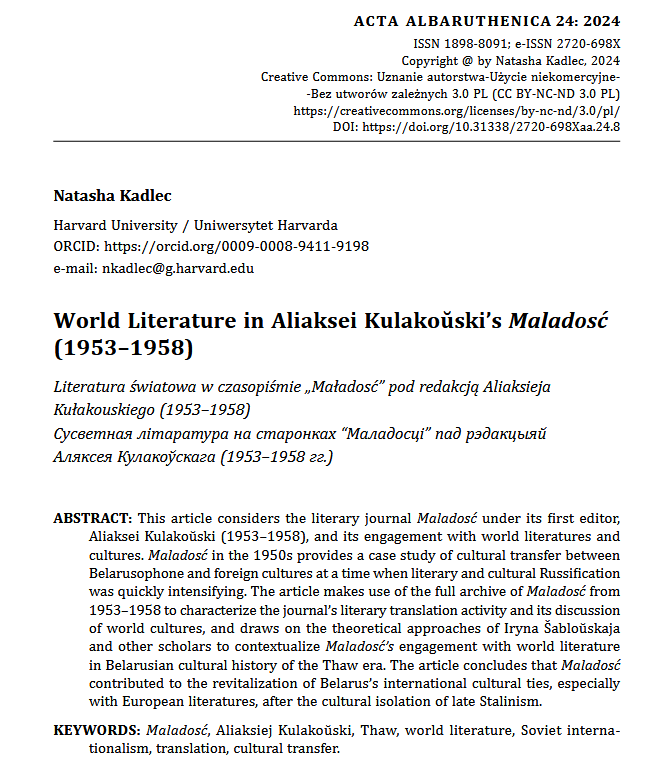
- For book reviews: We apply the same guidelines as for articles; additionally, above the text, we include a headline (in bold) referring to the reviewed work [name and surname of the author of the reviewed work, year of publication, title of the work (italics), place of publication, name of publisher, and number of pages]. Below the text, we write the name and surname of the review’s author (in italics on the right) and their e-mail address.
An example:
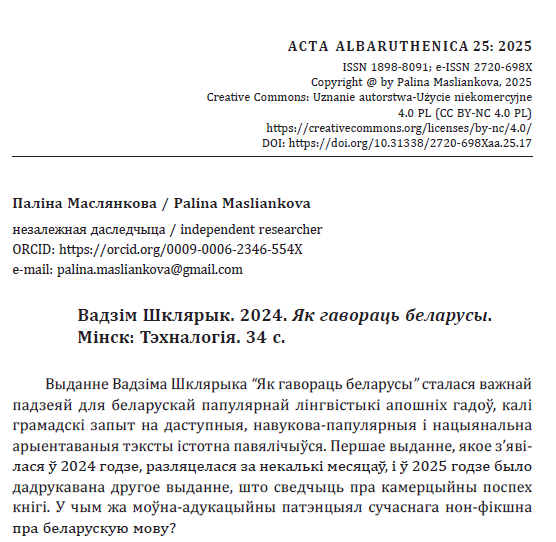
In addition to reviews, the Editorial Board accepts review articles in which the author, on the basis of the reviewed publication, adds their own new analyses and conclusions and refers to the relevant scholarly literature. In such cases, references and a References (bibliography) section should be prepared according to the same rules as for research articles.
For conference reports and fieldwork reports we apply the same guidelines as for articles; additionally, above the text, we place the title of the conference (text font), place and time of its organization (day, month, year).
- Along with the text (as an auxiliary file) the following data about the author should be submitted: name and surname, title and academic degree, place of work (university or other institution, department, function, workplace address), e-mail (preferably working address), address for correspondence, scientific specialization, scientific interests and a list of all articles by the author from the last 2 years. By submitting their personal data, the author agrees to make them public, both in print and in electronic form.
- The article/review should be accompanied by a Statement(downloadable), which must be signed by the author’s hand. The completed and signed statement can be delivered personally to the Department of Belarusian Studies, sent by traditional mail to the Editorial Office’s address, or alternatively, scanned/photographed and send the scan/photo of the original by e-mail to actaalba@gmail.com
- The length of articles should not be less than 0.5 publishing sheets (20,000 characters including spaces) or more than 1 publishing sheet (40,000 characters including spaces). The length of posted reviews and reports should be of up to 8,000 characters. Individual cases should be discussed with the Editorial Board.
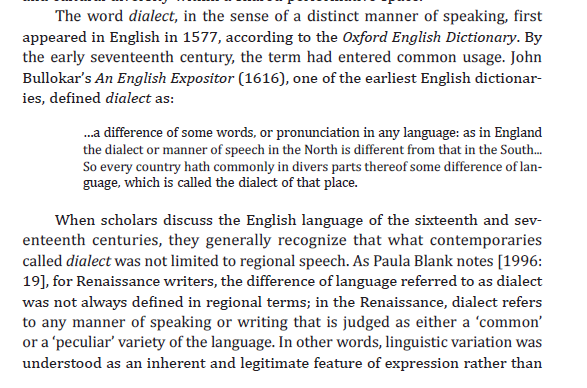
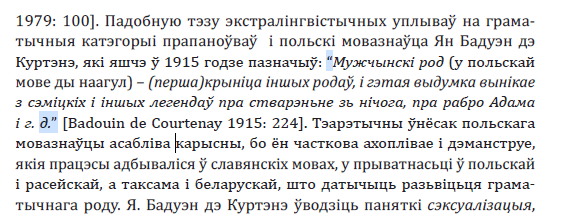
- Quotations up to three lines of text are enclosed in quotation marks (without italics), longer quotes are distinguished by indentation (applies to the entire quote), using a font of 10 points; omitted fragments should be marked with ellipsis in parentheses, i.e. (…), in texts in Polish and English, and with angle brackets, i.e. <…>, in texts in Belarusian.
Examples:
- We use abbreviations to indicate periods of time in Polish and Belarusian, e.g., r. (instead of rok, roku), w. (instead of wiek, wieku), г. (instead of год, годзе), ст. (instead of стагоддзе, стагоддзі). Authorial comments should be provided in the form of footnotes (font size 10 pt.), inserted automatically. In the main text, footnotes in Polish and Belarusian should be placed before the period (1.) or after the quotation mark and before the period (”1.). In English texts, the footnote should be placed after the period (.1). We do not use two footnotes in the same location.
- In the text, it is allowed to use highlighting, i.e. italicsand bold. The titles of the quoted works and articles (in the main text and in footnotes), foreign expressions, and words and expressions that are examples should be written in italics. We reserve bold for titles, terms, and fragments of texts that require distinction.
- Titles of journals should be enclosed in quotation marks („ ” without italics) in both the main text and footnotes, e.g., „Acta Albaruthenica” (in English texts, journal titles should be written in italics without quotation marks, e.g., Acta Albaruthenica).
- When referring to a scholar for the first time, provide their full name. In subsequent references, use only the surname or the surname with the initial of the first name.
- When mentioning the name of an institution, the first time we write the full name with an abbreviation, and the abbreviation should be used in subsequent references.
- Citations referencing literature on the subject are to be placed within the text in square brackets, e.g., [Kowalski 2025: 34].
- Texts submitted to the yearly publication Acta Albaruthenica should be linguistically correct and prepared in accordance with the requirements specified by the Editorial Board. Texts that do not meet these requirements will not be accepted for printing.
- The author of a publication is responsible for its copyright and publishing rights.
MAKING REFERENCES:
We place footnotes in the main text as follows:
[name, year of publication: pages], e.g. [Александровіч 1971: 15]1 autor: [Kot 2015: 58],
One author: [Kot 2015: 58],
In the case of more than one work by a given author, published in the same year, additional letters of the alphabet should be added next to the date (e.g., 2019a, 2019b): [Kmita 2015a: 65, 2015b: 120–124] (for a page range, use an en dash (–) rather than a hyphen (-)).
Two authors of one work: [Barys, Kalita 2015: 65],
Three authors of one work: [Barys, Kalita, Trat 2015: 65],
Multiple authors: [Kalita et al. 2015: 65] – in the bibliography under the article, all authors’ names should be listed.
If the author’s name appears in the sentence, it should not be repeated in brackets, e.g., “Jan Kot [1933: 123–125] introduced the term…”; “In his [1922a, 1922b] articles, Steward argued that…”.
When citing works by different authors, they should be listed in chronological order based on the year of publication (starting with the oldest works) and separated by semicolons, e.g., [Kalita 2001: 15; Barys 2015: 65].
Edited works should be cited in the same way as authored works, with the addition of (ed.) in parentheses, depending on the language of the article:
One editor: [Kowalski (ed.) 2015: 54],
Two editors of one work: [Barys, Kalita (eds.) 2015: 65],
Three editors of one work: [Barys, Kalita, Trat (eds.) 2015: 65],
Multiple editors: [Kalita et al. (eds.) 2015: 65] – in the bibliography under the article, all editors’ names should be listed.
PREPARING THE BIBLIOGRAPHY LIST:
The author compiles one list of references for the entire work. The order of bibliographic items should be alphabetical, according to the names of the authors or the titles of collective works – the bibliography should be continuous without distinct sections; entries should be listed one after another. Do not number or bullet the entries; each new entry should begin a new paragraph.
All editors of collective works and dictionaries should be mentioned and marked with an abbreviation in the language consistent with the publication (ed. / red. / pэд.) Before their surname. The list should only include works that are referred to or cited in the text (authors should check that all cited works are included in the bibliography and that there are no entries in the bibliography that are not referenced in the text).
Works by the same author should be listed from the oldest to the most recent, e.g.:
Kaleta Radosław. 2014. Belarusian-Polish Interlingual Homonymy. Warszawa: Slavic Publishing Center of the Institute of Slavic Studies, Polish Academy of Sciences.
Kaleta Radosław. 2015. Polish-Belarusian Glottodidactic Lapsology. Warszawa: Department of Belarusian Studies, University of Warsaw.
Kaleta Radosław. 2018. Errorology in Belarusian Glottodidactics. Warszawa: Department of Belarusian Studies, University of Warsaw.
Works by the same author published in the same year should be ordered alphabetically by title (page ranges should be given with an en dash – rather than a hyphen -), e.g.:
Kaleta Radosław. 2013a. “On the Project of a Belarusian-Polish Dictionary of False Friends in the Context of Polish-Belarusian Lexicography Achievements. Studia Slavica XVII/1: 83–90.
Kaleta Radosław. 2013b. “Types of Interlingual Homonymy (A Review of Positions). Respectus Philologicus 23(28): 141–150.
Kaleta Radosław. 2013c. “Deceptive Belarusian-Polish Equivalents. Studies in Polish and Slavic Philology 48: 123–141.
Bibliographic items written in Belarusian Cyrillic in the bibliography must be supplemented with the scholarly transliteration as available at:
https://www.translitteration.com/transliteration/en/belarusian/scholarly/
Bibliographic entries written in Russian Cyrillic in the bibliography must be supplemented with the scholarly transliteration as available at:
https://www.translitteration.com/transliteration/en/russian/scholarly/
For the letter yat (ѣ), the transliteration is ě – select Old Church Slavonic (scholarly) transliteration at:
https://www.translitteration.com/transliteration/en/old-church-slavonic/ala-lc/
After the transliterated variant, the original Cyrillic form should be provided in square brackets.
RECORD OF BIBLIOGRAPHY
Monographs and dictionaries
Example: Aleksandrovič Scjapan. 1971. Pucjaviny rodnaha slova. Minsk: BDU [Александровіч Сцяпан. 1971. Пуцявіны роднага слова. Мінск: БДУ].
Reference to this work in the text of an article in Polish and English: [Aleksandrovič 1971: 15]; reference in the text in Belarusian: [Александровіч 1971: 15].
Example: Kłoskowska Antonina (ed). 1991. Encyclopedia of Polish Culture of the 20th Century. Concepts and Issues in Cultural Studies. Wrocław: Wiedza o Kulturze.
Reference to this work in the text of an article in Polish [Kłoskowska (red.) 1991: 15] and English: [Kłoskowska (ed.) 1991: 15]; reference in the text in Belarusian: [Kłoskowska (рэд.) 1991: 15].
Example: Chylak-Schroeder Teresa, Głuszkowska-Babicka Jadwiga, Jasińska-Socha Teresa (eds.). 2012. Belarusian-Polish Dictionary. Warszawa: Department of Belarusian Studies, University of Warsaw.
Reference to this work in the text of an article in Polish [Chylak-Schroeder, Głuszkowska-Babicka, Jasińska-Socha (red.) 2012: 15] and English: [Chylak-Schroeder, Głuszkowska-Babicka, Jasińska-Socha (eds.) 2012: 15]; reference in the text in Belarusian: [Chylak-Schroeder, Głuszkowska-Babicka, Jasińska-Socha (рэд.) 2012: 15].
In cases of frequent references to multiple dictionaries, abbreviations of dictionary titles may be used instead of editors’ names, e.g., [SBP 2012: 15]. In such cases, the bibliography should provide the following details:
SBP 2012 = Chylak-Schroeder Teresa, Głuszkowska-Babicka Jadwiga, Jasińska-Socha Teresa (eds.). 2012. Belarusian-Polish Dictionary. Warszawa: Department of Belarusian Studies, University of Warsaw.
DSB 1989 = Malažaj Halina (rèd.). 1989. Dyjalektny sloŭnik Brèstčyny. Minsk: Navuka i tèxnika [ДСБ 1989 = Малажай Галіна (рэд.). 1989. Дыялектны слоўнік Брэстчыны. Мінск: Навука і тэхніка].
One method of presenting dictionary entries must be chosen consistently: either all entries should be listed by abbreviations, or all should be listed by the editors’ surnames.
Chapters in monographs
Example: Kisjalëŭ Henadz′. 1994. “Kisel′ Apanas.” In: Belaruskija pis′menniki: Bijabiblijahrafičny sloŭnik u 6 tamax. Minsk: Belaruskaja Èncyklapedyja. 65–98 [Кісялёў Генадзь. 1994. “Кісель Апанас.” У: Беларускія пісьменнікі: Біябібліяграфічны слоўнік у 6 тамах. Мінск: Беларуская Энцыклапедыя. 65–98].
Reference to this work in the text of an article in Polish and English: [Kisjalëŭ 1994: 15]; reference in the text in Belarusian: [Кісялёў 1994: 65].
Example: Raźny Anna. 2001. “Wiechi – From the Quest for Freedom to Totalitarian Enslavement. From the Experiences of the Russian Intelligentsia.” In: Intelligentsia. Tradition and New Times. Ed. Hanna Kowalska. Kraków: Jagiellonian University Press. 15–25.
Reference to this work in the text of an article in Polish, Belarusian, and English: [Raźny 2001: 15].
The first name and surname of the editor of an edited volume must always be provided. In the case of Belarusian and Russian works, the first name may be replaced with initial(s), as this is how it usually appears on the title page of the cited publication.
Example: Demidova Kalerija. 2008. “Dialektnaja jazykovaja kartina mira i osobennosti ejo reprezentacii v častnyx dialektnyx sistemax (na materiale russkix govorov Urala).” In: Leksičeskij atlas russkix narodnyx govorov (materialy i issledovanija). Red. S.A. Myznikov, E.Ž. Kuznecova, O.N. Krylova, O.V. Glebova.Sankt-Peterburg: Nauka. 68–80 [Демидова Калерия. 2008 “Диалектная языковая картина мира и особенности её репрезентации в частных диалектных системах (на материале русских говоров Урала).” В: Лексический атлас русских народных говоров (материалы и исследования). Ред. С.А. Мызников, Е.Ж. Кузнецова, О.Н. Крылова, О.В. Глебова. Санкт-Петербург: Наука. 68–80].
Reference to this work in the text of an article in Polish and English: [Demidova 2008: 69]; reference in the text in Belarusian: [Демидова 2008: 69].
Journal articles
Example: Kaleta, Radosław. 2025. “Inflectional Intricacies of Belarusian and Polish Surnames.” Academic Journal of Modern Philology 27: 185–202.
Reference to this work in the text of an article in Polish, Belarusian, and English: [Kaleta 2025: 189].
Example: Šljubski Aljaksandr. 1927. “Konfiskacyja PANA TADÈUŠA D.-Marcinkeviča.” Uzvyšša 2: 200–201 [Шлюбскі Аляксандр. 1927. “Конфіскацыя ПАНА ТАДЭУША Д.-Марцінкевіча.” Узвышша 2: 200–201].
Reference to this work in the text of an article in Polish and English: [Šljubski 1927: 15]; reference in the text in Belarusian: [Шлюбскі 1927: 15].
Names of journals published in Belarus should be given in angle quotation marks “” in articles written in Belarusian, e.g., “Узвышша”, while names of journals published in Poland should be given in quotation marks „ ” in articles written in Polish, e.g., „Acta Albaruthenica”. In texts written in English, authors should use italics for journal titles: Acta Albaruthenica.
Example: Bruchnalski Wilhelm. 1922. Z “Pamiętników” M. Marksa, witebszczanina. Lud XXI: 151.
Reference to this work in the text of an article in Polish, Belarusian and English: [Bruchnalski 1922: 15].
Example: Levancèvič Lena. 2025. “Karcina svetu”: pytanni typalohii ŭ linhvistyčnyx dasledavannjax.” Trudy BHTU. Ser. 4. Print- i mediatexnologii 1(291): 120–125 [Леванцэвіч Лена. 2025. “Карціна свету”: пытанні тыпалогіі ў лінгвістычных даследаваннях.” Труды БГТУ. Сер. 4. Принт– и медиатехнологии 1(291): 120–125].
Reference to this work in the text of an article in Polish or English: [Levancèvič 2025: 125]; reference in a text in Belarusian: [Леванцэвіч 2025: 125].
Archive materials:
Example: LVIA 1248–2–1497, l. 234–247v, Lietuvos valstybės istorijos archyvas (the title of the document can also be added).
Reference to this work in the text of an article in Polish, Belarusian, and English: [LVIA] (a specific number or signature can also be provided if there are multiple documents).
Example: NHA RB u Hrodne, f. 1, vop. 22, spr. 1121, ark. 401–418v, Nacyjanal′ny histaryčny arxiŭ Belarusi ŭ Hrodne [НГА РБ у Гродне, ф. 1, воп. 22, спр. 1121, арк. 401–418v, Нацыянальны гістарычны архіў Беларусі ў Гродне].
Reference to this work in the text of an article in Polish and English: [NHA]; reference in the text in Belarusian: [НГА] (a specific number or signature can also be provided if there are multiple documents).
Online publications:
Only items that are available exclusively online should be listed here. All information available on the webpage must be provided: the author’s surname and first name, the title, and the year of publication on the website (if indicated).
Additionally, include the designation [online], the link (if it is very long, please shorten it using a URL shortener available online), and the date of access to the text in square brackets (without the word “accessed”).
Example: “Genealogy of Poles: A Catalogue of January Uprising Insurgents” [online] https://genealogia.okiem.pl/powstanies/index.php?nazwisko=Piekarski [September 28, 2019].
Reference in the text of an article in Polish, Belarusian, and English: [“Genealogy of Poles…” (online)]. If the title is long, it is sufficient to provide only the first 2–3 words in the reference and add ellipses. If the year of publication is not provided on the page, we add the term (online) in parentheses.
Example: “Gliński Mikołaj. Poland and Belarus – Twin Lives” [online]
https://culture.pl/pl/artykul/polska-i-bialorus-zywoty-blizniacze [March 25, 2025].
Reference in the text of an article in Polish, Belarusian, and English: [Gliński (online)].
Example: Korbut Viktar. 2021. “Linguist: The Situation of the Belarusian Language in Poland Today Is the Best Among All Countries Outside Belarus” [online] https://www.polskieradio.pl/396/8226/artykul/2818282 [October 1, 2021].
Reference in the text of an article in Polish and English: [Korbut 2021]; reference in the text in Belarusian: [Корбут 2021].
Unpublished Doctoral/Master’s Thesis
Example: Kaleta Radosław. 2007. Selected Morphological Aspects in the Comparison of Two Orthographic Standards: Tarashkevitsa and Narkomauka. Master’s Thesis. Supervisor: Nina Barszczewska PhD with habilitation. Warsaw: University of Warsaw.
The supervisor’s surname, the type of thesis, and the place of publication must be provided.
Reference in the text of an article in Polish, Belarusian, and English: [Kaleta 2007: 15].
Conference Papers
Example: Bernatowicz Joanna. 2024. “The Polish Translation of The Long Road Home by Vasil Bykau – Challenges, Contexts, Translation Strategies.” Conference: Vasil Bykau. Literary Legacy in a New Perspective (on the occasion of the 100th anniversary of the writer’s birth). University of Warsaw.
Reference in the text of an article in Polish, Belarusian, and English: [Bernatowicz 2024].